Science & Social Studies at TLA Academy
Explore. Question. Connect. Understand.
TLA Academy’s Science & Social Studies program encourages learners to explore both the natural world and the communities around them. Through hands-on investigations, observation, discussion, projects, stories, and real-world connections, students build foundational knowledge while developing curiosity, critical thinking, and a deeper understanding of their place in the world.

Course Overview
Science & Social Studies are taught through an integrated, inquiry-based approach that encourages students to ask questions, make observations, investigate ideas, and connect what they are learning to everyday life.
Science
Science learning focuses on developing both foundational scientific knowledge and essential inquiry skills. Students explore age-appropriate topics in areas such as life science, physical science, Earth and space science, weather, environments, and the natural world.
Activities are differentiated based on each learner’s current level of understanding. Younger learners may practice observing, identifying, sorting, comparing, and describing, while more advanced learners may develop scientific questions, make predictions, collect information, use measurement tools, record results, and communicate conclusions.
Social Studies
Social Studies introduces learners to foundational concepts in history, geography, civics, and economics.
Learning begins with concepts children can personally relate to—themselves, their families, classroom, and community—and gradually expands to explore local, state, national, and global communities.
Students are encouraged to connect social studies concepts to their own lives, including what it means to participate in a community, respect differences, make responsible choices, understand rules and responsibilities, and contribute as a citizen of an inclusive classroom.
Course topics are informed by the Virginia Department of Education Standards of Learning (SOL) while allowing activities to be adapted to students' individual learning levels.
What We’ll Explore
Science
-
Scientific observation and inquiry
-
Plants, animals, and living things
-
Habitats and ecosystems
-
Weather and seasons
-
Earth and space
-
Matter, motion, and energy
-
Measurement and data collection
-
Experiments and investigations
-
Asking questions, making predictions, and communicating discoveries
Social Studies
-
Families and communities
-
Past and present
-
Virginia and U.S. history
-
Geography, maps, and globes
-
Cultures and traditions
-
Community helpers and institutions
-
Citizenship, rules, and responsibilities
-
Basic economics, needs, wants, goods, and services
-
Understanding our local and global community
What Learning Looks Like
Science & Social Studies at TLA are designed to be active, connected, and exploratory.
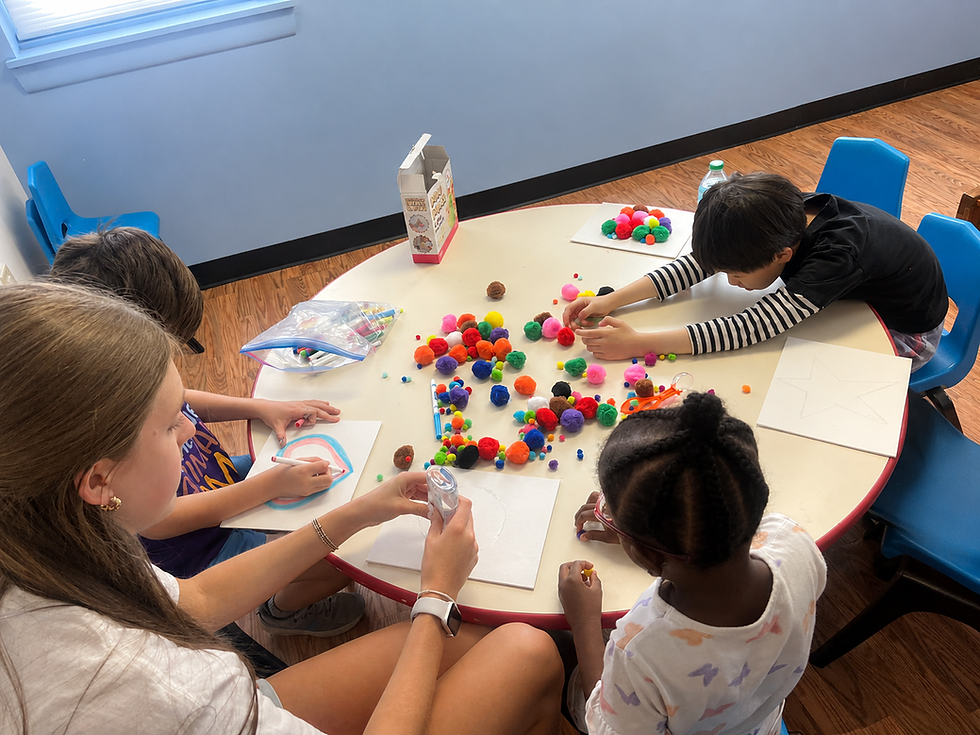
Students might conduct an experiment, observe something outdoors, create a map, grow a plant, investigate weather, compare communities, explore an important historical figure, collect and graph data, build a model, examine artifacts, or work collaboratively on a project.
A typical learning experience might follow:
Wonder → Explore → Investigate → Make Connections → Share What We Discovered
Connecting Science & Social Studies
Whenever possible, the two subjects connect with each other and with other TLA programs.
For example, a study of plants might include investigating what plants need to survive in Science, learning how communities use natural resources in
Social Studies, measuring plant growth in Math, reading informational books in ELA, and creating a garden-related Project-Based Learning activity.
A study of another country might incorporate geography, climate, ecosystems, history, culture, food, art, and traditions, creating natural connections with TLA World Travelers.
This interdisciplinary approach helps students understand that subjects don't exist independently—learning is connected to the world around us.
Meeting Learners Where They Are
Students can explore the same topic at different levels of complexity.
One learner may identify and describe characteristics of an animal, another may classify animals based on shared characteristics, while another investigates how adaptations help an animal survive in its environment.
Similarly, one learner may identify their home and school on a simple map while another begins exploring cities, states, countries, continents, and geographic features.
Shared experiences bring the class together while differentiated activities allow each learner to participate and grow from their individual starting point.
%20(1).jpeg)